

2026-11-10
Takeaways from our policy roundtable on EU Inc. and financial literacy
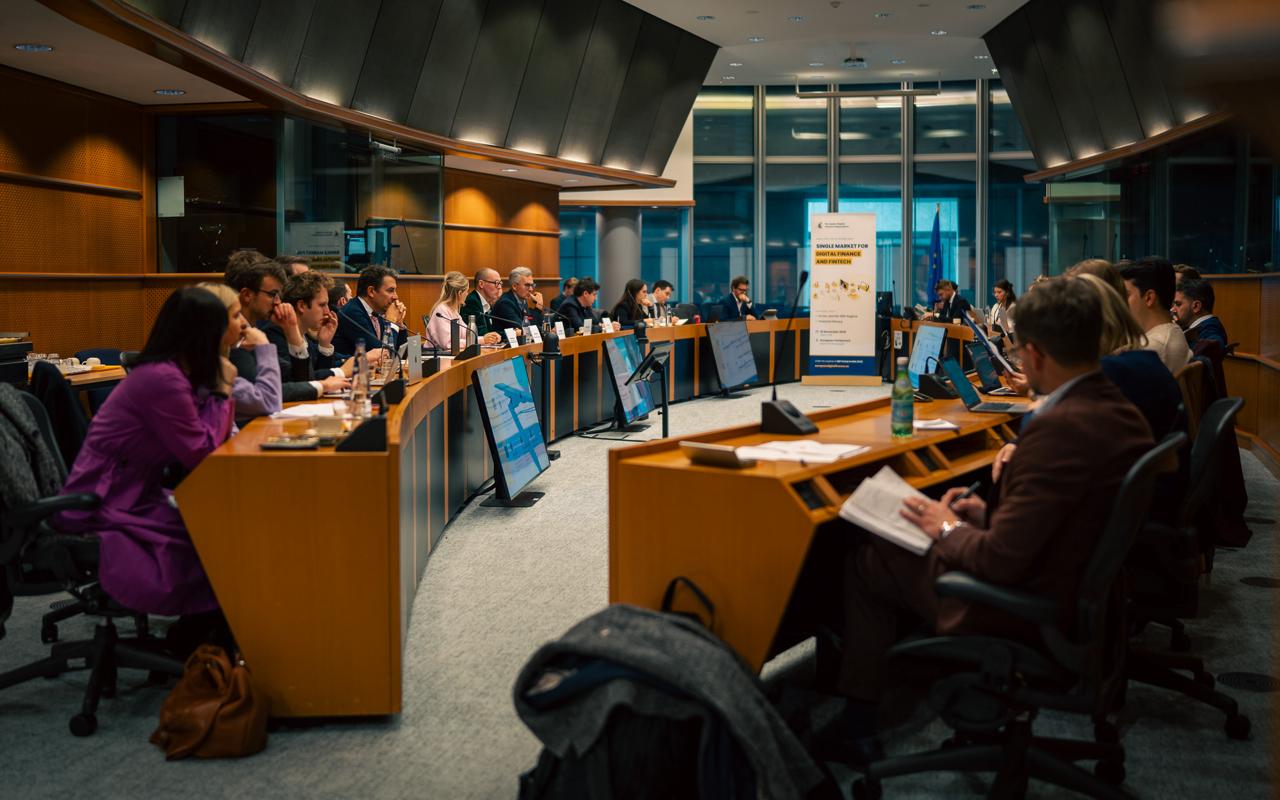
Registering a company takes 20 days on average in France, 10 in Germany and up to 30 in Italy, according to Qonto. EU Inc., the proposed EU-wide company form for start-ups and scale-ups, is meant to change that. On 10 November 2026, EDFA brought MEPs, the European Commission, the European Economic and Social Committee (EESC) and fintech founders to the European Parliament to discuss it, together with financial literacy. The policy roundtable was hosted by MEP Ondřej Krutílek (ECR, CZ).
Broad support, with one request: keep it simple
Around the table, EU Inc. had broad support as a pragmatic starting point against fragmentation. MEP Krutílek called fintech a good test case for the Single Market. Where it works, as with passporting for payments and e-money, fintechs scale; where it does not, they face 27 sets of rules. He noted that the proposal covers company set-up well but says less about how companies operate, and asked negotiators to give it a chance and keep it simple, enforceable and predictable. MEPs who are not yet convinced, he added, need concrete arguments from industry. France FinTech, represented by Benoit Bazzocchi, also confirmed its support.
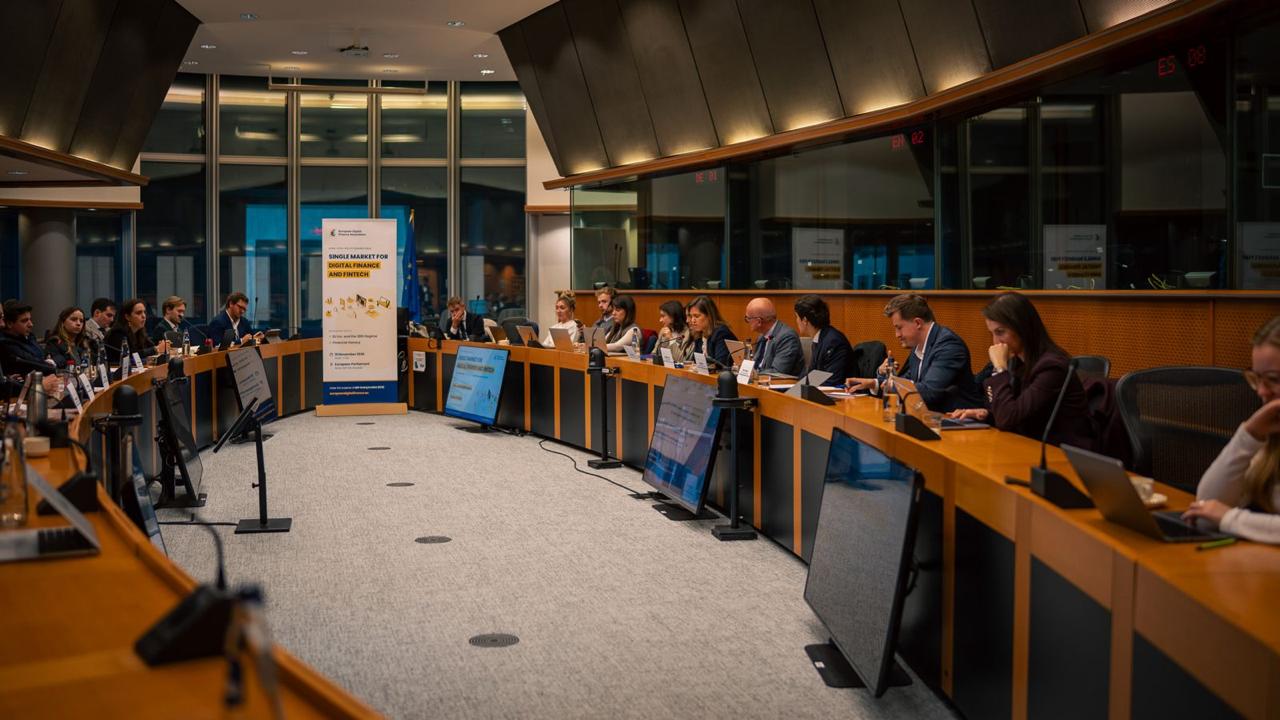
A fully digital route decides whether it works
The most concrete point of the afternoon was about process. A fully digital route is the most important element of EU Inc. and the hardest to deliver, said Jane Newman of Qonto, which serves over 750,000 businesses across eight markets. If the European interface does not connect to national registries, tax authorities and the providers founders use, the work falls on founders when it should be done by the system.
National requirements added on top would undo the benefit and create “27+1” regimes. Jiri Hauptmann, EDFA Director for Public Affairs, listed this national leeway among the main friction points in the negotiations, alongside employee participation, the balance between speed and AML checks, and eligibility. One-shot digital procedures are among the priorities EDFA set out in its response to the Commission’s 28th Regime consultation.
Lower costs, and stock options that help hiring
For fintechs, the gains are practical. An automatically recognised entity would cut the cost of running local entities, audits and compliance, said Jeremy Sulzbacher, CEO of Safe Transactions. Harmonised employee stock options matter for hiring, and a Commission representative clarified that they are the proposal’s only tax element. The representative explained that the 28th Regime is a company law proposal, that existing anti-avoidance safeguards remain unchanged, and that a regulation gives companies more certainty than a directive.

What EU Inc. will not fix
Some of the barriers fintechs raise most often sit outside the proposal, from licensing and passporting to divergent supervision and reporting. Access to banking is another. Many young fintechs struggle to open a bank account in the EU and end up banking with UK or other non-EU providers. Some, Jeremy Sulzbacher pointed out, cannot even get started.
These issues will need their own follow-up, with supervisors as much as with legislators. EDFA works on exactly this gap with national authorities through Bridging Borders, whose second edition in Paris looked at where the passport still falls short in practice.
Financial literacy: informed choice, and a role for fintechs
Only 18% of EU citizens have a high level of financial literacy, according to the Commission’s 2023 Eurobarometer, and speakers saw this as the weak demand side of the Savings and Investments Union. There was broad agreement that the goal is informed choice. The Commission is now moving its Financial Literacy Strategy into implementation, starting with an assessment of more than 200 good-practice submissions, and encouraged fintechs to speak about the opportunities of AI and new technologies as well as the risks.
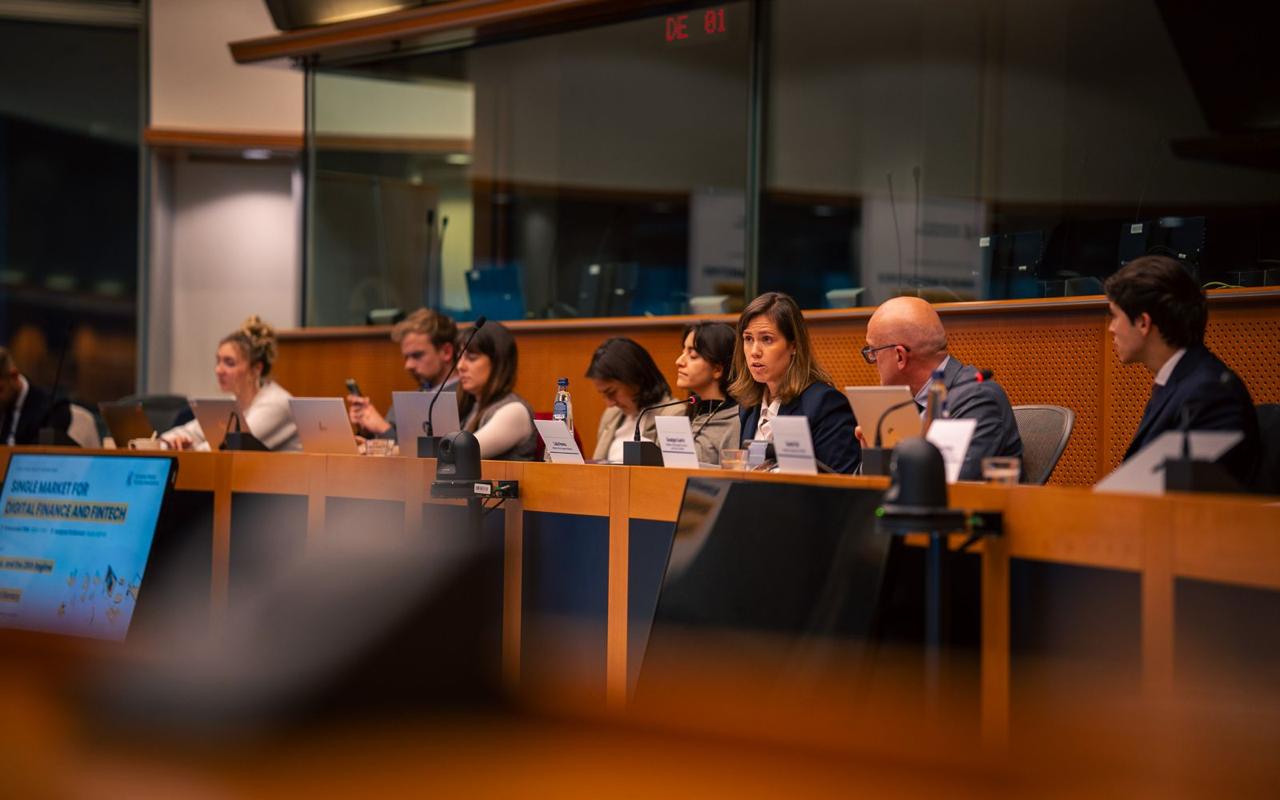
Parliament set out its view in a resolution on financial literacy and finfluencers, adopted in April. Its rapporteur, MEP Lídia Pereira (EPP, PT), called for financial literacy to be treated as a lifelong key competence, from school through to a first job, a home or retirement. The resolution explicitly invites the fintech sector to take part, and she noted that fintech apps often reach young Europeans better than public campaigns, provided they are transparent.
Views differed on how far the state should lead. MEP Pierre Pimpie (PfE, FR), shadow rapporteur, warned that state-led education risks steering savers towards favoured sectors, and argued that simpler products and rules would do more than training. Giuseppe Guerini, the EESC’s rapporteur on financial literacy and education for Europeans, put trust and civil society at the centre, and cautioned that financial education must not shift responsibility from institutions onto individuals. Jiri Hauptmann presented Invisibles, a programme run by IPF with NGO partners, as one example of industry and civil society reaching excluded groups together.
Two sides of the same coin

Closing the event, Alessandra Guion, Chair of EDFA, brought the two topics together. EU Inc. would let fintechs grow across Europe without facing 27 rulebooks, and financial literacy helps people understand and trust the services they use. Europe, she said, needs both.
EDFA will continue working with the co-legislators on EU Inc. as negotiations progress. On financial literacy, the Commission plans a voluntary code of conduct for providers by Q1 2027. To follow both files, subscribe to the EDFA newsletter.
EDFA thanks MEP Krutílek and his office for hosting, and all speakers and participants for their contributions.
→ Read about EDFA at Finweek Bratislava: one market on paper, 27 in practice